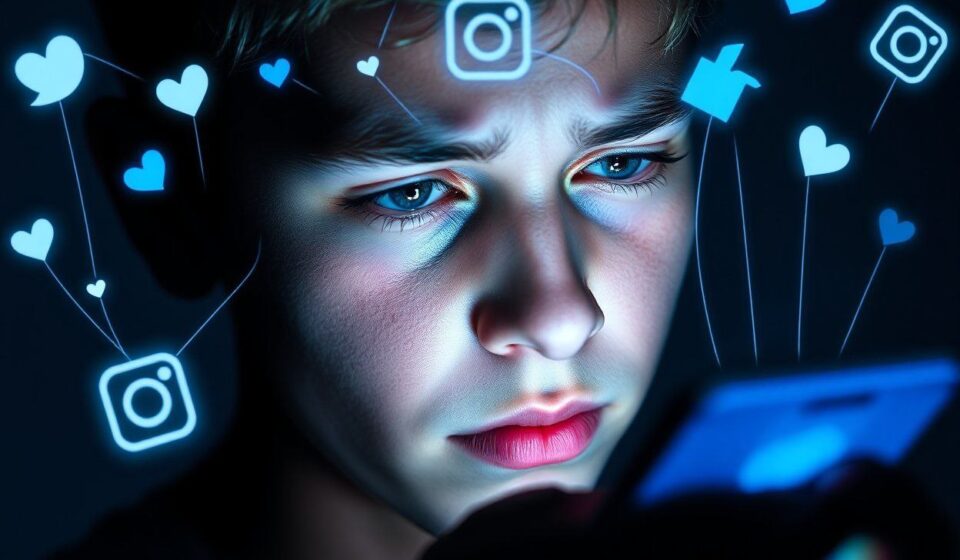

I still remember the moment I realized I had a problem. I was at dinner with friends, having what should have been a great time, but I kept pulling out my phone. Not to check messages or take calls, just to see if anyone had liked my latest post. Seven likes. Then twelve. Then fifteen. Each notification gave me a tiny rush, but it faded almost instantly, leaving me craving more.
That’s when it hit me: I wasn’t using social media. Social media was using me.
If you’ve ever felt a pang of anxiety when a post doesn’t get enough likes, if you’ve compared your life to someone’s highlight reel and felt inadequate, if you’ve caught yourself scrolling mindlessly for hours despite planning to check “just for a minute”, you’re not weak. You’re not vain. You’re experiencing exactly what these platforms were designed to make you feel.
Social media apps aren’t just tools for connection. They’re sophisticated psychological manipulation machines, engineered by some of the smartest behavioral scientists and designers in the world. Their goal isn’t your happiness or genuine connection. It’s engagement, keeping you scrolling, posting, comparing, and coming back for more. And the cost of that engagement is often your mental health, your self-esteem, and your sense of reality.
This isn’t a conspiracy theory. Former executives from major tech companies have openly admitted that these platforms exploit vulnerabilities in human psychology. They’ve compared their work to creating slot machines that dispense social approval instead of money. And just like slot machines, social media is designed to be addictive.
Let me be clear: I’m not here to tell you to delete all your accounts and move to a cabin in the woods. Social media has genuine benefits, it connects us with loved ones, enables movements for social change, and provides platforms for creativity. But understanding how these platforms manipulate us is the first step to using them on our terms rather than theirs.
The Neuroscience of Validation Addiction
Your brain didn’t evolve with Instagram in mind. It evolved over millions of years in small tribal groups where social acceptance literally meant survival. Being rejected by your tribe could mean death. So your brain developed powerful systems to seek approval and avoid rejection.
Social media hijacks these ancient systems with surgical precision.
Every time you get a like, a comment, or a share, your brain releases dopamine, the same neurotransmitter involved in gambling, drugs, and other addictive behaviors. This isn’t metaphorical. Brain imaging studies show that social media notifications activate the same neural pathways as cocaine.
But here’s the truly insidious part: the dopamine hit isn’t triggered by the reward itself. It’s triggered by the anticipation of the reward. This is why you compulsively check your phone even when there are no notifications. Your brain has learned that sometimes there’s a reward, and that unpredictability makes the behavior even more addictive.
Psychologists call this a “variable ratio reinforcement schedule,” and it’s the same mechanism that makes slot machines so addictive. You don’t know when the next reward is coming, so you keep pulling the lever, or in this case, refreshing your feed.
I watched a friend post a photo and then spend the next hour periodically checking it, her mood visibly lifting or falling based on the engagement. She wasn’t consciously aware of it, but her brain was treating each notification like a tiny hit of a drug. And when the notifications slowed, she experienced something resembling withdrawal, anxiety, restlessness, the urge to post again.
The validation cycle works like this: You post something. You wait. You check obsessively. You get validation (or don’t). If you do, you get a dopamine rush, but it fades quickly, so you need another hit. If you don’t, you feel rejected and anxious, which drives you to try again, adjusting your content to be more “likeable.”
Either way, the platform wins. You’re engaged, you’re posting, you’re scrolling, and you’re seeing ads.
What makes this particularly damaging is that external validation becomes your primary source of self-worth. Instead of deriving confidence from your own values, achievements, and relationships, you start measuring your worth in likes, followers, and comments. Your self-esteem becomes dependent on the approval of people who are often strangers or casual acquaintances.
This creates a devastating vulnerability. When validation comes, you feel temporarily good but increasingly dependent. When it doesn’t come, you don’t just feel disappointed, you feel worthless. Your sense of self becomes externalized, controlled by the whims of an algorithm and the scattered attention of people scrolling through hundreds of posts.
The variable nature of this validation makes it even more psychologically damaging. If you always got the same response, you could predict and adjust. But social media rewards are unpredictable. Sometimes a post gets hundreds of likes; sometimes it barely registers. This unpredictability keeps you constantly off-balance, always trying to crack the code, always seeking that next hit of approval.
The Comparison Trap: Why Everyone’s Life Looks Better Than Yours
Psychologists have known for decades that humans engage in social comparison, we evaluate ourselves by comparing ourselves to others. This helped our ancestors understand where they stood in social hierarchies and motivated self-improvement.
But social media has turned healthy comparison into a mental health crisis.
Here’s why: you’re comparing your behind-the-scenes to everyone else’s highlight reel. You see your full reality, the messy apartment, the difficult morning, the argument with your partner, the work stress, the insecurities. But you see only the curated, filtered, carefully selected best moments of everyone else’s lives.
It’s not a fair comparison, but your brain doesn’t know that. Your brain just sees: they’re happy, successful, attractive, traveling, in love, living their best life. And you’re… not measuring up.
This phenomenon is so common it has a name: “compare and despair.” And research consistently shows that the more time people spend on social media, the more likely they are to experience depression, anxiety, and low self-esteem.
I fell into this trap hard during a difficult period in my life. My career felt stalled, my relationship had just ended, and I was struggling financially. Every time I opened Instagram, I saw former classmates getting promotions, friends getting engaged, acquaintances traveling to exotic locations. My rational mind knew these were curated snapshots, not full realities. But emotionally, it felt like everyone else had figured out life and I was failing.
What I didn’t see were the struggles behind those perfect photos. The friend posting engagement photos had been in therapy for months working through relationship issues. The classmate celebrating a promotion was drowning in debt and anxiety. The traveler was running from depression. But none of that made it into the posts.
Social comparison on social media is particularly toxic because it’s constant and unavoidable. In pre-digital life, you’d occasionally encounter someone who seemed to have it better, but you’d also see the full complexity of their lives. Now you’re exposed to thousands of people’s best moments, one after another, creating an impossible standard that no real human life could match.
There’s also what researchers call “upward social comparison”, comparing yourself to people who seem better off. This can be motivating in small doses, but on social media it becomes relentless. You’re always seeing someone prettier, more successful, happier, more loved. The algorithm actually prioritizes showing you this content because it generates engagement through envy and inadequacy.
The platform benefits from your insecurity. When you feel inadequate, you’re more likely to keep scrolling, looking for validation or proof that your life measures up. You’re more likely to post your own curated content to compete. You’re more likely to buy the products advertised that promise to make you as happy/successful/attractive as the people you’re comparing yourself to.
Your insecurity is their business model.
Algorithmic Manipulation: You’re Not Seeing Reality
Most people don’t understand that what appears in their social media feeds isn’t random and isn’t chronological. It’s algorithmically curated to maximize your engagement, which means showing you content that triggers strong emotional reactions.
The algorithm learns what keeps you scrolling. If you tend to engage with content that makes you envious, you’ll see more envy-inducing content. If you engage with political outrage, you’ll see more outrage. If you engage with content that makes you feel inadequate, the algorithm will serve you more inadequacy.
This creates what researchers call “algorithmic amplification of emotional content.” The posts that get promoted aren’t necessarily the most representative or truthful, they’re the most emotionally provocative.
I tested this deliberately once. I started engaging heavily with fitness content, liking posts from bodybuilders and athletes. Within days, my entire feed was filled with people with impossible physiques, often enhanced by steroids, lighting, angles, and editing. The algorithm had learned this content kept me engaged (through a mixture of motivation and inadequacy), so it fed me more and more extreme examples.
The result was predictable: I felt terrible about my own body, despite being reasonably fit. I was comparing myself to content creators whose full-time job is looking a certain way, often with pharmaceutical enhancement, and the algorithm was systematically hiding more realistic representations of human bodies.
This algorithmic curation creates filter bubbles and echo chambers that distort your perception of reality. If the algorithm learns you respond to certain types of content, it will show you more of it and less of everything else. Your social media feed stops being a window to the world and becomes a funhouse mirror reflecting a distorted reality designed to keep you engaged.
The platforms know this causes harm. Internal research from Facebook (leaked by whistleblower Frances Haugen) showed the company knew Instagram was toxic for teenage girls’ mental health, particularly around body image. They knew the algorithm was amplifying harmful content. But they didn’t change it because engagement, and therefore profit, was the priority.
You’re not seeing what’s happening in the world or even what your friends are actually posting. You’re seeing what an algorithm calculated will keep you scrolling longest. And that content is often specifically designed to make you feel inadequate, outraged, or anxious, because those emotions drive engagement.
The Perfectionism Pandemic: Performing for an Invisible Audience
Social media has created something unprecedented in human history: a generation performing their lives for an invisible audience of hundreds or thousands of people, most of whom they barely know.
Every photo becomes a potential post. Every experience gets evaluated not just for its inherent value but for its shareability. People choose restaurants based on how Instagram-worthy they are. Relationships are documented and curated for public consumption. Even grief and struggle get packaged into performative posts.
This constant performance creates exhausting pressure to appear perfect. You can’t just be, you have to be seen being, and that being has to look good.
I know someone who spent three hours on a beach vacation staging photos for Instagram instead of actually enjoying the beach. The vacation became secondary to the documentation of the vacation. The performance of happiness replaced actual happiness.
This performative pressure particularly affects young people who have never known life without social media. Research shows rates of anxiety, depression, and perfectionism have skyrocketed in the social media era, particularly among teenage girls. The pressure to maintain a perfect online persona while simultaneously comparing yourself to everyone else’s perfect personas creates a psychological trap with no escape.
The performance isn’t just about looking good, it’s about looking effortlessly good. You can’t appear to be trying too hard. Your curated perfection has to seem natural and spontaneous. This creates an additional layer of psychological strain: pretending you’re not pretending.
There’s also the problem of authenticity paradox. People crave authentic connection, so platforms are filled with posts about “being real” and “showing vulnerability.” But even these authentic moments are curated, filtered, and performed. The confession of insecurity becomes another form of content designed to generate engagement. Vulnerability becomes a performance of vulnerability.
This constant performance fragments your sense of self. You’re no longer just living your life, you’re simultaneously living it and observing it from the perspective of your imagined audience. This split consciousness is psychologically exhausting and prevents genuine presence and enjoyment.
FOMO and the Scarcity Mindset
Fear of Missing Out (FOMO) predates social media, but these platforms have turned it into a constant, low-level anxiety that colors daily life.
Before social media, you might occasionally hear about events or experiences you missed. Now you see them in real-time, in vivid detail, multiple times a day. Every scroll reveals another party you weren’t invited to, another trip you’re not taking, another experience you’re not having.
This creates a scarcity mindset where you’re constantly aware of what you don’t have rather than appreciating what you do. Your brain becomes trained to focus on absence rather than presence.
The psychological impact is profound. Research shows that FOMO is associated with lower life satisfaction, lower psychological well-being, and higher levels of social media engagement, creating a vicious cycle. The more FOMO you experience, the more you use social media to stay connected and informed, which exposes you to more experiences you’re missing, which increases FOMO.
I experienced this acutely during a period when I was working intensely and couldn’t socialize much. My Instagram feed was filled with friends at concerts, parties, dinners, and gatherings. Rationally, I knew I couldn’t attend everything and that my work was important. Emotionally, I felt increasingly isolated and left out, convinced everyone was having amazing experiences without me.
What I wasn’t seeing were the boring evenings, the lonely moments, the struggles and mundane realities that make up most of life. I was seeing only the social highlights, creating the illusion that everyone else lived in a constant state of exciting social connection while I was alone.
FOMO also drives compulsive checking behavior. You constantly monitor social media to make sure you’re not missing something important, which ironically causes you to miss what’s actually happening in your present moment. You’re so focused on what you might be missing that you miss what you’re actually experiencing.
The platforms deliberately exploit FOMO through features like Stories that disappear after 24 hours, creating artificial urgency. They use “X is live now” notifications. They show you when friends are “active” or “online.” All of these features are designed to make you feel like you need to check constantly or you’ll miss something important.
Breaking Free: Reclaiming Your Mental Space
Understanding manipulation is the first step to resisting it. Here are practical strategies for using social media without letting it use you.
Audit your emotional response. For one week, note how you feel before using social media and after. If you consistently feel worse, more anxious, inadequate, or depressed, that’s valuable data. The platform isn’t serving you.
Curate ruthlessly. Unfollow or mute accounts that make you feel bad, even if they’re friends or influencers you “should” follow. Your feed should serve your wellbeing, not social obligation. Follow accounts that inspire without inducing inadequacy, that educate without enraging, that connect without comparing.
Disable notifications. This single change can dramatically reduce compulsive checking. You decide when to check social media; don’t let the platform decide for you. The vast majority of notifications aren’t urgent and don’t require immediate attention.
Set time boundaries. Use app timers or scheduling to limit social media use. I found that checking once in the morning and once in the evening, rather than constantly throughout the day, significantly reduced my anxiety while keeping me reasonably connected.
Practice posting without checking. Share something and then deliberately don’t check the response for several hours or a full day. This breaks the dopamine cycle and helps you rediscover posting for its own sake rather than for validation.
Reality-check the comparison. When you find yourself comparing, actively remind yourself: “I’m comparing my behind-the-scenes to their highlight reel.” Better yet, remember that even their highlight reel is often staged, filtered, and fake.
Diversify your validation sources. Build self-worth from real-world accomplishments, relationships, values alignment, and personal growth. The more you derive confidence from sources the algorithm can’t touch, the less power it has over you.
Take regular breaks. Periodic social media detoxes, even just a weekend, can reset your relationship with these platforms and remind you how much mental space they occupy.
Engage consciously. Before opening an app, ask yourself why. Are you bored? Anxious? Seeking specific information? Often we open social media out of habit rather than intention. Conscious engagement reduces mindless scrolling.
Remember: it’s designed to be addictive. You’re not weak for struggling with this. You’re human, and you’re up against billion-dollar companies employing the best behavioral scientists in the world. Be compassionate with yourself while taking active steps to protect your mental health.
Social media manipulation isn’t a personal failing, it’s a systematic exploitation of human psychology for profit. These platforms are designed by experts to trigger our deepest insecurities, hijack our reward systems, and keep us in a constant state of comparison and inadequacy.
But awareness is power. Once you understand the mechanisms, the dopamine manipulation, the algorithmic curation, the performative pressure, the comparison trap, you can start making conscious choices about how these platforms fit into your life.
You don’t have to delete everything and disappear. But you do have to recognize that your relationship with social media is probably not neutral. It’s either serving you or you’re serving it. It’s either adding genuine value to your life or extracting it.
The choice is yours, but only if you make it consciously. Because if you’re not intentional about how you use these platforms, they’re being very intentional about how they use you.
Your worth isn’t measured in likes. Your life isn’t inadequate because it doesn’t look like a curated feed. Your value doesn’t depend on algorithmic approval. You are enough, exactly as you are, even if no one ever sees it, likes it, or validates it online.
Remember that, and you’ve already won.